
Unearth the essentials of choosing the perfect camping knife, designed for outdoor lovers and survivalists seeking top-notch performance and durability in their tools.
Factors to Consider
Understanding the intricacies of camping knife selection, from blade materials to handle design, empowers outdoor enthusiasts to make wise purchasing decisions tailored to their individual needs.
A well-chosen camping knife enhances outdoor experiences, boosts survival capabilities, and contributes to a well-prepared and efficient equipment set.
Survivalists need to pay heed to several key factors when choosing an outdoor knife, including blade design, size, weight, tang integrity, material quality, and knife type, improving their equipment’s overall performance and survival functionality.
Blade Material
When it comes to camping knives, the choice of blade material is paramount. It determines the knife’s cutting proficiency, durability, and overall longevity.
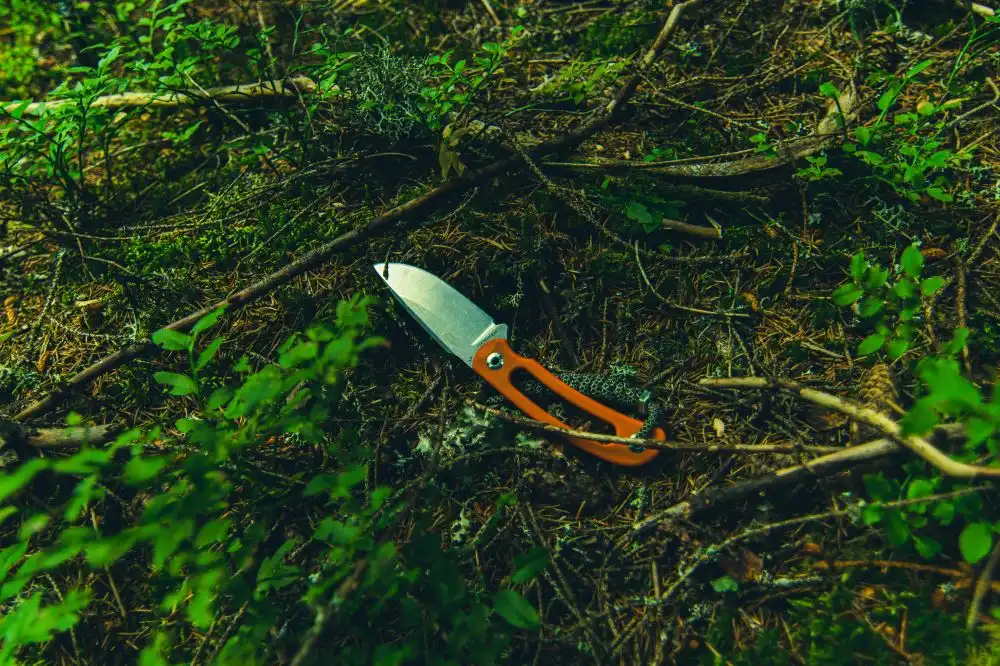
- Stainless Steel: Exceptional rust resistance and ease of sharpening.
- High Carbon Steel: Offers superior edge retention and easier to sharpen.
- Titanium: Lightweight, durable, but not ideal for heavy-duty tasks.
- Ceramic: Incredibly sharp, but fragile and tough to sharpen.
- Damascus Steel: Renowned for exceptional toughness and beautiful patterns, though it requires careful maintenance.
Blade Design
In survival and camping scenarios, the design of a knife’s blade greatly impacts its functionality and effectiveness. From tip shape and blade edge to length and grind, every element plays a crucial role in determining the knife’s performance for specific tasks.
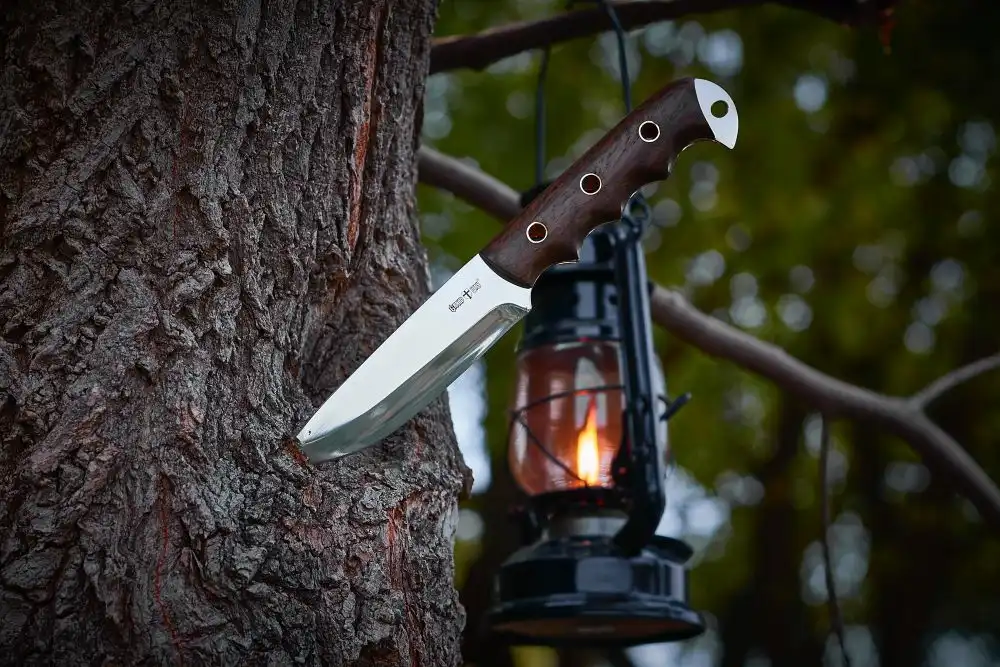
- Consider a drop-point or clip-point blade for a good balance of precision and durability.
- A serrated or partially serrated edge is ideal for sawing and cutting tough materials.
- A tanto blade excels at piercing and prying.
- For general use and versatility, a plain edge provides the best results.
- A flat or hollow grind is suitable for slicing and skinning.
- A convex grind is perfect for heavy-duty tasks such as chopping wood.
Handle Material
In survival scenarios, maintaining a solid grip on your camping knife is pivotal. The handle material must ensure user comfort and control under variable conditions.
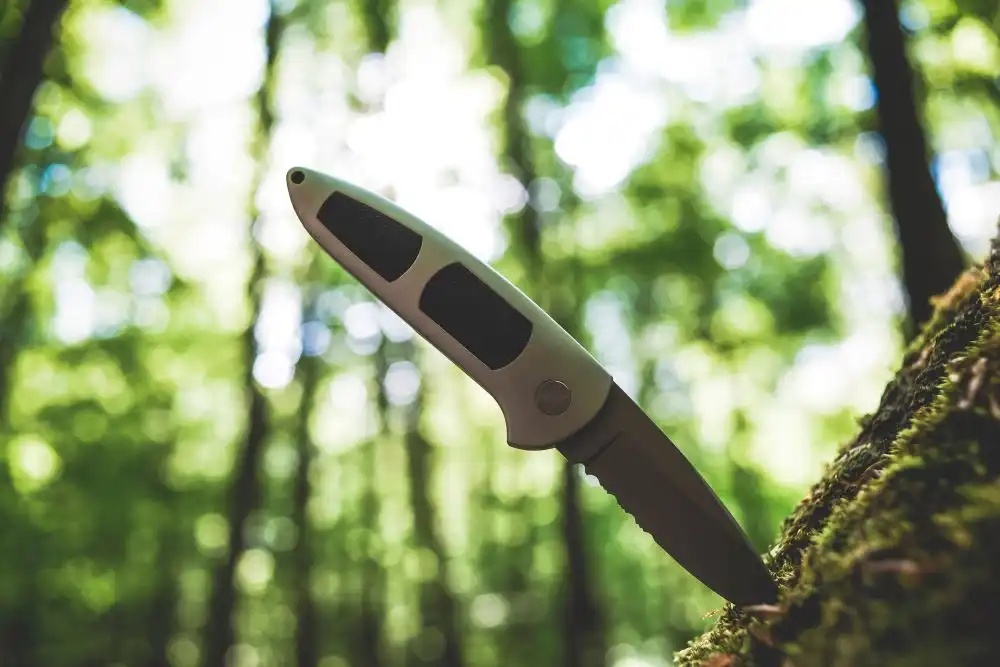
- G10: A highly durable, moisture-resistant material, often textured for increased grip.
- Kraton: A synthetic rubber with excellent shock absorption and high friction levels, even when wet.
- Carbon Fiber: Superior strength-to-weight ratio but can be slick when wet.
- Micarta: Composite made of linen, canvas, fiberglass, paper, or carbon fiber. It offers an excellent grip, especially when wet.
- Hardwood: Retains a natural, vintage feel. It is typically treated to be water-resistant but may need regular maintenance.
- Stainless Steel or Aluminum: Durable and hygienic, but can be cold in freezing temperatures and slippery when wet.
Size and Weight
When considering a camping knife, size and weight are pivotal. They significantly influence portability, convenience, and application during survival situations.
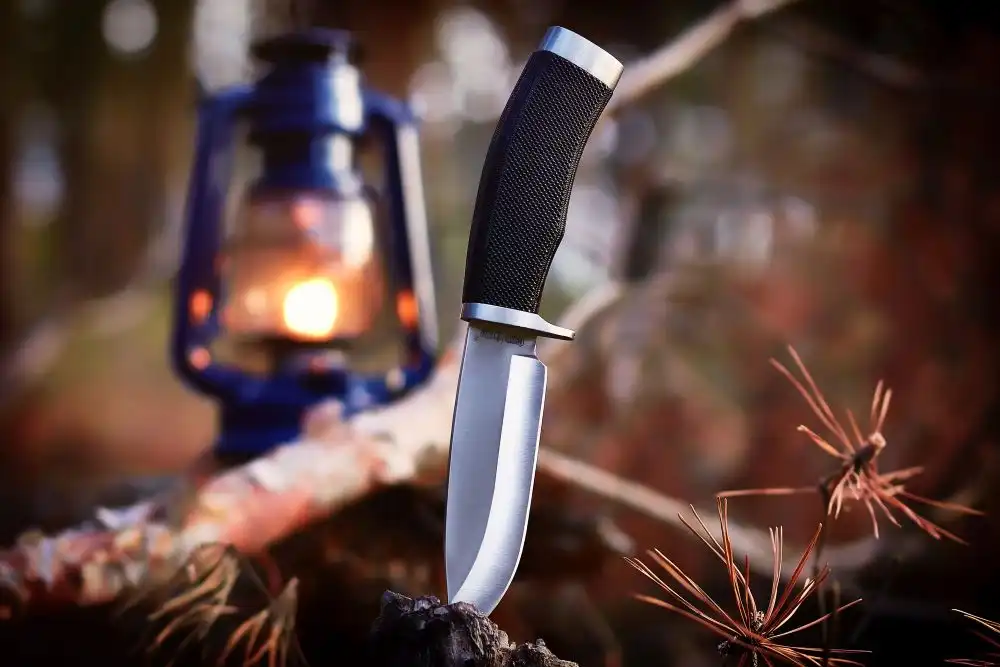
- Aim for a moderate size – knives too small may lack function, while ones too large may be challenging to manipulate.
- Consider weight, lighter knives are easier to carry but may not be durable. Conversely, heavy knives could tire you out but ensure longer-lasting use.
- Think about your intended use – if you frequently perform heavy-duty tasks, a larger, heavier knife may be appropriate. For lighter, more delicate tasks, small, lightweight knives might suit best.
Full Tang or Partial Tang
The choice between a full tang or partial tang knife highly impacts the knife’s resilience and capability. The full tang design entails that the blade material extends into the handle, providing superior durability and force application. Conversely, partial tang knives, while lighter, may not endure rigorous tasks.
- Full Tang: Ideal for heavy-duty tasks, such as batoning or chopping.
- Partial Tang: Best suited for delicate tasks or lightweight backpacking.
Types of Camping Knives
The realm of camping knives is vast, extending far beyond just fixed and folding knives. From the rugged durability of a fixed blade to the compact convenience of a folding knife and the sheer versatility of a multi-tool knife, each serves a unique purpose tailored to diverse outdoor scenarios.
Our review unravels the strengths and uses of each knife type. A fixed blade for tough tasks, a folding knife for convenient carry and a multi-tool for multifaceted usability. This exploration will empower you to select the right knife to aid your survival in the great outdoors.
Fixed Blade Knives
When it comes to coping with tough outdoor conditions, fixed blade knives emerge as the top choice. Their one-piece design confers enhanced strength and durability, making them indispensable in survival scenarios.
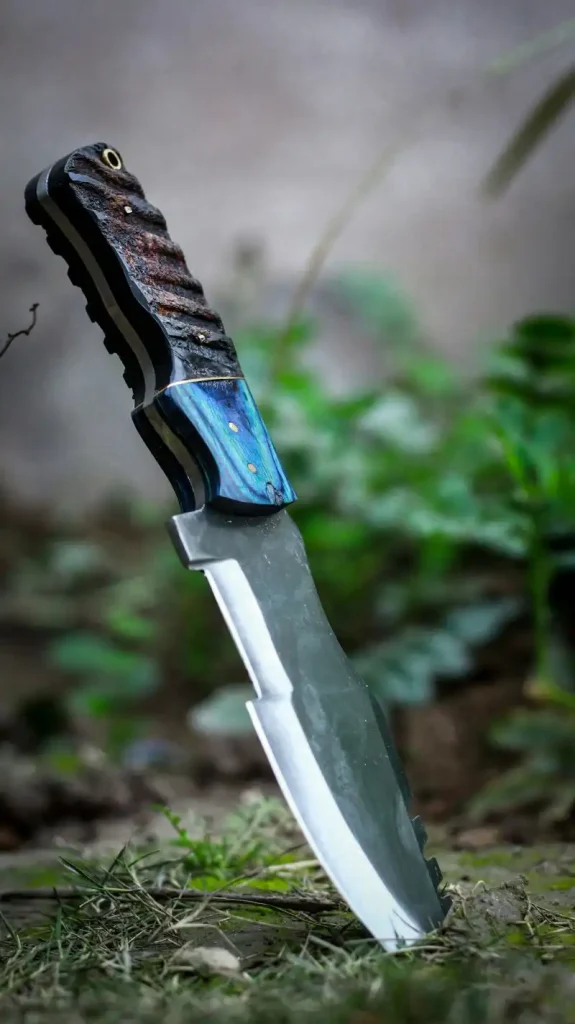
In the harsh wilderness, fixed blade knives prove to be an outdoor adventurer’s trusty sidekick. They excel in tasks from building shelter to catching prey, their robust structure demonstrating unmatched reliability and diverse functionality in critical survival tasks.
Folding Knives
Folding knives pack a powerful punch despite their compact form factor. Their unique selling point lies in their design, allowing for easy transportation and safe storage without compromising on the cutting efficiency crucial in an outdoor setting.
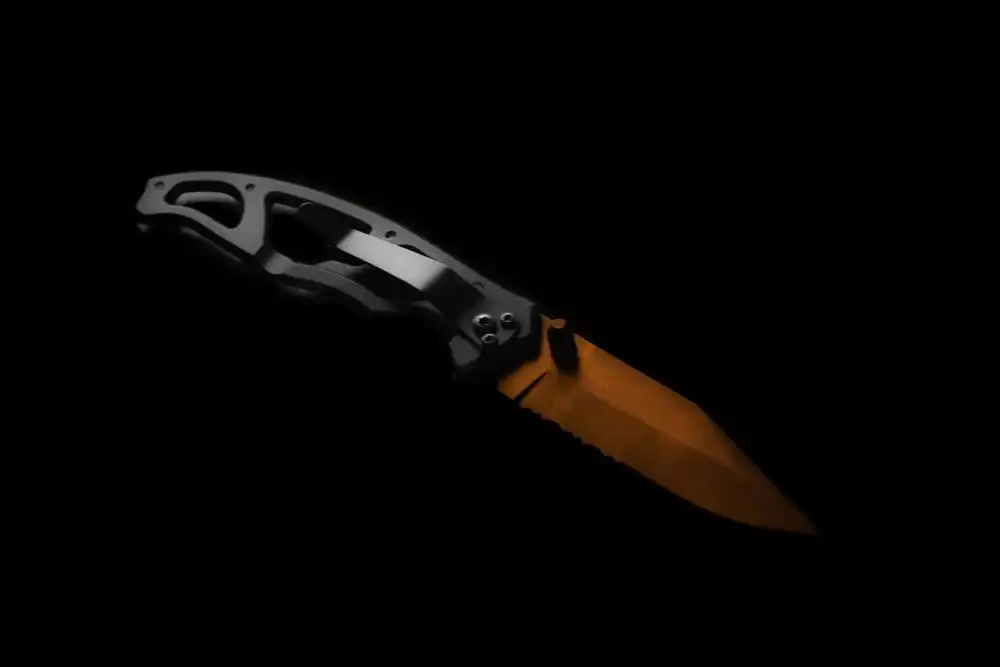
Camping or survival scenarios oftentimes demand swift and hassle-free access to your toolkit. Folding knives excel in this domain as they can be effortlessly opened with one hand, enhancing convenience and ease of use.
The versatility of a folding knife cannot be understated while venturing outdoors. Whether it’s for quick food prep or creating a fire started, they make for an inherently adaptable accompaniment in a survivalist’s arsenal.
Multi-tool Knives
A multi-tool knife acts as a comprehensive survival kit, compacted into a single compact, pocket-sized tool. Its efficiency in camping scenarios is unparalleled as it combines commonly used tools, ensuring wilderness survival tasks more manageable.
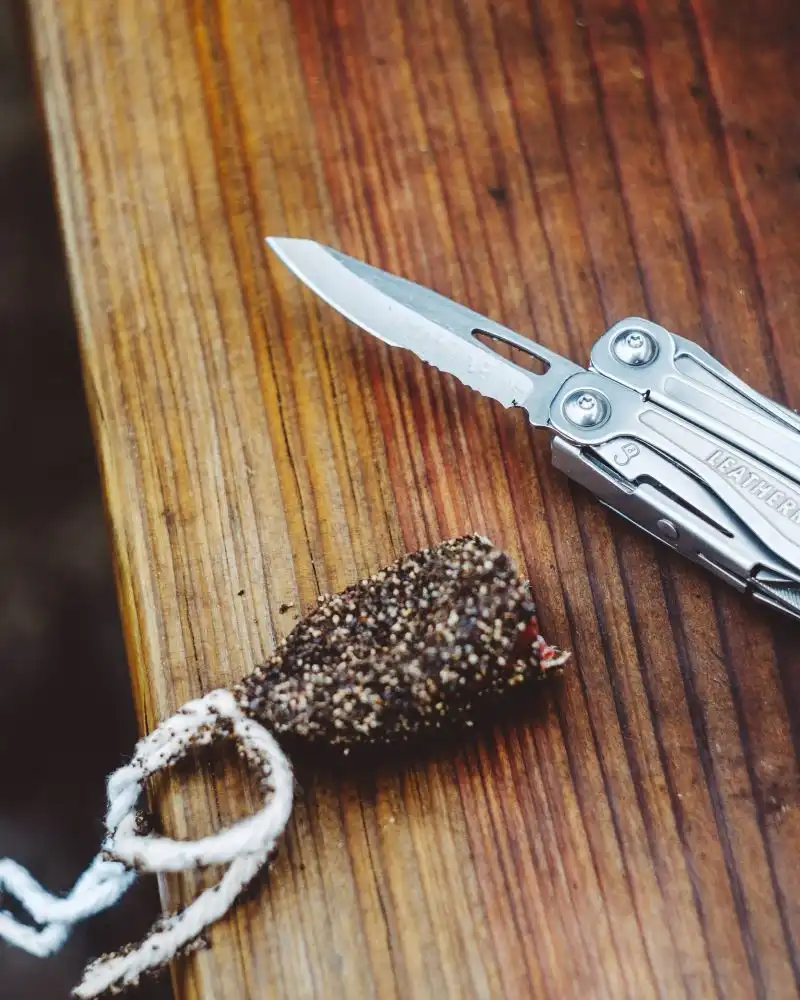
Survival situations demand adaptability, making multi-tool knives indispensable. They embody the ‘Jack of all Trades’ philosophy, providing you with an array of tools from screwdrivers to can openers, giving you the edge in any situation.
Essential Features to Look For
In assessing the fundamentals of a camping knife, factors such as sharpness, edge retention, ergonomics, and grip come into play. Additionally, resilience against wear, rust resistance, versatile functionality, and safety features prove essential in picking the perfect knife.
The indispensable qualities of a survival knife encompass more than a sharp blade. Emphasis should be given on longevity, the comfort and maneuverability offered by its grip, its adaptability across various tasks, and the built-in safety precautions ensuring secure use.
Sharpness and Edge Retention
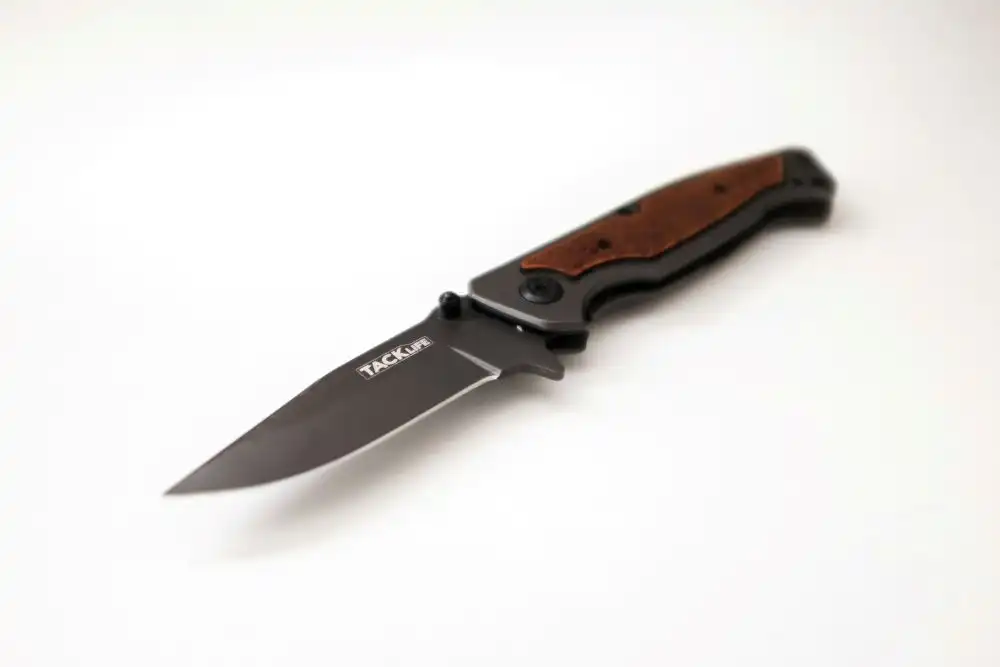
Sharpness is non-negotiable in a quality camping knife. A keen edge simplifies tasks like slicing, skinning, chopping, and whittling, providing precision and efficiency in an outdoor setting.
Edge retention matters for maintaining your knife’s cutting potency over extended periods. Survival situations demand tools that can perform consistently without the luxury of frequent sharpening, highlighting the need for excellent edge endurance.
Ergonomics and Grip
Understanding the crucial nature of knife ergonomics is paramount. A poorly designed handle can make the knife slip under pressure, possibly leading to dangerous injuries. Choose handles with textured surfaces or contours that enhance grip strength and control.
The underrated significance of knife ergonomics comes to light when survival is at stake. A survival knife’s grip can make all the difference in tough outdoor scenarios where firm handling is vital. Remember, the greatness of a knife often lies in its ergonomics.
Durability and Rust Resistance
Camping knives are the front line against nature’s rigors. Hence, a quality knife should possess strong rust resistance. Regular exposure to the elements, particularly moisture, demands a blade built to stand the test of time.
Durability is paramount in survival situations. A reliable camping knife should withstand heavy usage, taking on tasks from crafting a shelter to prepping meals. So, a knife made from robust materials is an outdoor enthusiast’s best friend.
Consider the blade type too, whether stainless steel or high carbon. Stainless steel offers excellent rust resistance, while high carbon boasts superior durability. Both types can serve you depending on the expected weather conditions and usage severity.
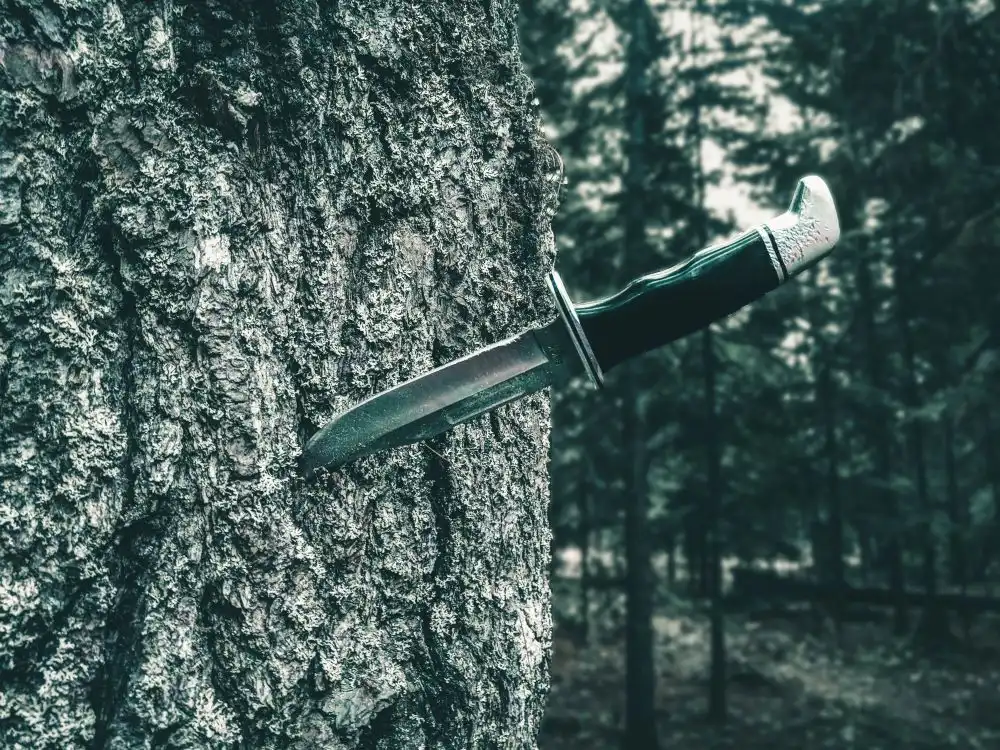
Versatility and Functionality
When it comes to selecting a camping knife, versatility is paramount. A multi-purpose tool can simplify outdoor challenges, being handy for everything from meal prep to emergency situations.
The survival knife’s adaptability highlights its role in functional design. A dependable blade that serves multiple roles raises the odds of seamless navigation through outdoor experiences.
Remember, a camping knife isn’t just a tool; it’s a survival companion. Search for balance in versatility and functionality. The more tasks one knife can handle, the leaner your pack, the better your progress.
Safety Features
When it comes to survival knives, safety features are vital in shielding reality from possible injuries. Key features include: a sturdy lock mechanism to prevent unexpected closures, a finger guard to avoid slipping onto the blade, and a sheath for safe storage.
Though unseen, the safety measures of your camping knife are the silent protectors against accident-related injuries. The ergonomics of the handle, textured for increased grip, are designed to maintain secure control, even in wet and rough conditions.
In addition, advanced models feature a pommel at the base of the handle. Useful for tasks like breaking or hammering, this handy safety feature mitigates the risk, further ensuring user safety in unpredictable wilderness settings.
Top Camping Knives on the Market
Pitching in the camping tools market are the forerunners, the top-performing tools that lead the pack. COLD STEEL SRK: The Ultimate Adventure Knife, ESEE 4: Perfect for Bushcraft, and ESEE Izula: Compact and Lightweight showcase unrivaled strength, superior blade quality, and exceptional handling.
Revolutionizing the camping world, the most innovative camping knives have just arrived in the market. These game-changers seamlessly combine traditional craftsmanship with cutting-edge technology, offering more than just ordinary cutting tools but survival buddies that heighten every outdoor experience.
COLD STEEL SRK: The Ultimate Adventure Knife
Carving its way through the wilderness, the Ultimate Adventure Knife, COLD STEEL SRK, showcases exceptional resilience and strength. Its superior blade material, ergonomic design, and full tang construction make it a master survival tool.
COLD STEEL SRK lends itself to being the quintessential camping knife. It promises extraordinary durability, steadfast performance, and high versatility, making it indispensable when adventure calls. Its distinct features cater to various outdoor needs, ensuring survival and safety in challenging terrains.
ESEE 4: Perfect for Bushcraft
For wilderness mastery, ESEE 4 stands unmatched. Its robust build, combined with excellent edge retention, makes it a bushcrafter’s dream, readily taming the wild.
Diving deeper into ESEE 4, the bushcraft expert, its razor-sharp blade arduously works through thick and thin, showcasing its jungle supremacy. An indispensable ally for any environmental challenge you face.
ESEE Izula: Compact and Lightweight
ESEE Izula proves that size isn’t everything. Despite its compact form, this knife punches above its weight class in terms of functionality. Its smart design maximizes space, offering a reliable solution for those needing to economize their packing.
Adept in both utility and ease of use, ESEE Izula showcases an impeccably sharp blade and feather-light form factor. This combination enhances portability without compromising durability, making it an ideal companion for outdoor enthusiast seeking practicality and performance in their camping tools.
Maintenance and Care Tips
Regular maintenance extends the lifespan of your camping knife. Harness sharpness and prevent rust by going beyond basic cleaning with preventive steps and proper sharpening strategies.
- For sharpening, use a dedicated knife sharpener or a honing stone; remember that different metals require different angles and techniques.
- Clean your blade immediately after use; dried-on dirt or blood can cause staining and corrosion.
- Keep your camping knife dry; rust is the number one enemy of metal blades.
- Regularly oiling your knife can protect it against moisture and enhance its operation.
- Store in a well-ventilated, dry space; leather sheaths, while aesthetically appealing, can trap moisture.
- For folding or multi-tool knives, ensure all components move freely and clean them regularly.
Final Thoughts
Selecting the right camping knife is about understanding your outdoor needs. It’s your ultimate survival companion, playing an integral part in your ability to survive and enjoy the wilderness. A well-chosen knife significantly ties camping and survival together.
- Evaluate the knife based on materials and design.
- Consider factors like size, weight, and blade type.
- Prioritize ergonomics, durability, and safety features.
- Choose between fixed, folding, or multi-tool variants.
- Maintain the blade for prolonged service and performance.